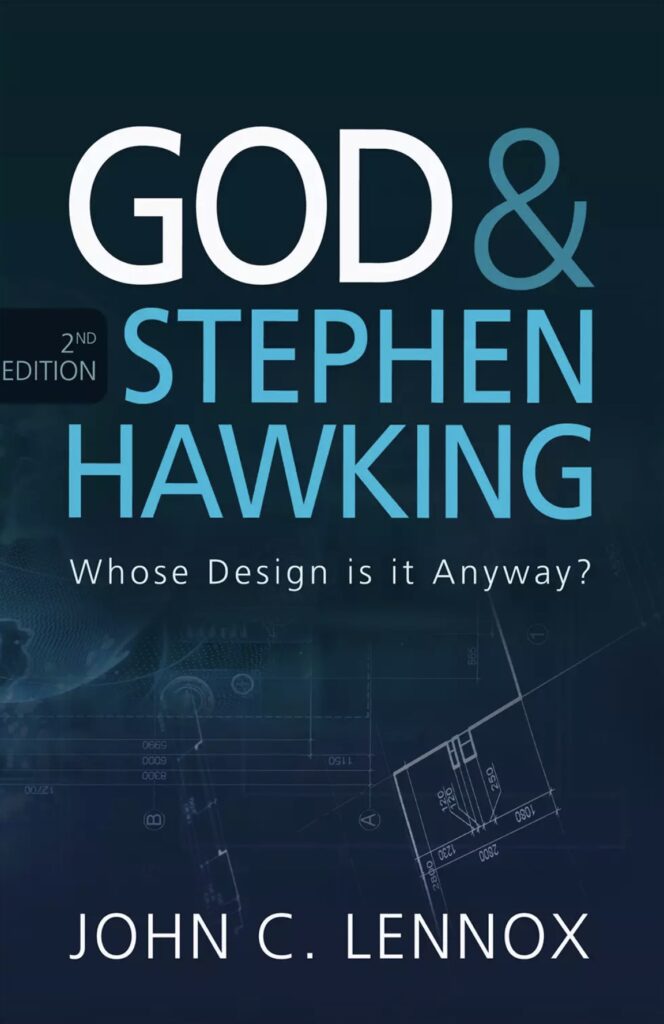
The Grand Design and Brief Answers to Big Questions by eminent scientist the late Stephen Hawking were blockbusting contributions to the science religion debate. They claimed it was the laws of physics themselves which brought the universe into being, rather than any God. In this forthright response, John Lennox, Oxford University mathematician and internationally-known apologist, takes a closer look at Hawking’s logic and questions his conclusions.
In lively, layman’s terms, Lennox guides us through the key points in Hawking’s arguments – with clear explanations of the latest scientific and philosophical methods and theories – and demonstrates that far from disproving a Creator God, they make his existence seem all the more probable.
Stephen Hawking died in 2019, and this seemed to be a good time to bring my book up to date by reflecting on his life’s work. I have taken the opportunity to amplify some of the original sections, particularly those dealing with the multiverse and ideas around generating the universe from “nothing.”
I am writing this in 2020 in self-isolation due to the coronavirus pandemic. As and indicator of the level of continued public interest in these questions let me say that, just before the introduction of stringent measured in Europe to reduce social distance, I was involved in a public moderated discussion at the University of Vienna with well-known agnostic mathematics professor, politician, author, and broadcaster, Dr Rudolf Taschner. It was a capacity audience of around 1,000 (unprecedented for Vienna, I am told), with every seat filled and many standing. The topic: Is it Rational to Believe in God? This event shows that the interest is still there, although public expression of it was almost immediately shifted to the internet, where my impression is that it increased, as lockdown has resulted in many people re-evaluating their lives and thinking even more about the big questions.
Rick Warren
Os Guinness
Get the latest updates about upcoming events, new books, videos, and other resources